A globe is much more than a decorative object. It is a representation of our planet that allows us to observe continents, oceans, and territories in their geographical arrangement.
But how do you correctly read a globe? And what do the lines crossing its surface represent?
To understand it, we must start with two fundamental elements of cartography: meridians and parallels.

Why is the Earth represented as a sphere?
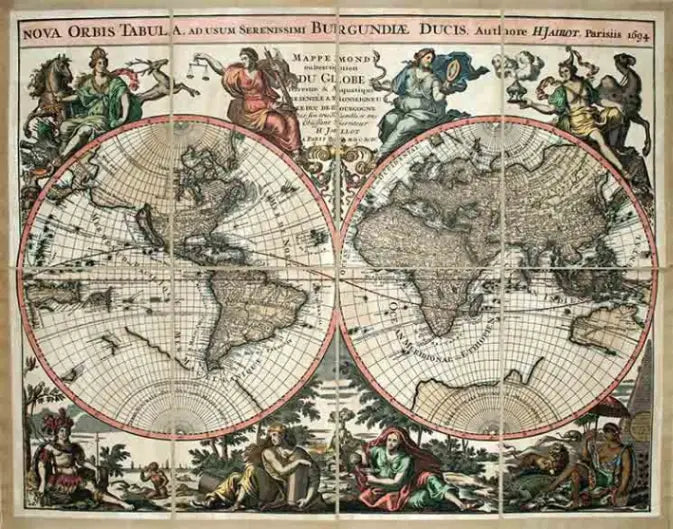
Traditional maps represent the Earth's surface on a flat plane. This inevitably results in some distortion of shapes, distances, or areas.
A globe, on the other hand, reproduces the approximately spherical shape of the Earth, allowing us to observe the geographical relationships between continents and oceans more naturally.
It is precisely this characteristic that makes it a particularly interesting tool for understanding geography.
What are parallels?
Parallels are imaginary circles that encircle the Earth parallel to the Equator.
The Equator is the main parallel: it divides the planet into the Northern and Southern Hemispheres.
Starting from the Equator, latitude is measured in degrees North or South, up to the poles.
Among the best-known parallels are the Tropic of Cancer, the Tropic of Capricorn, the Arctic Circle, and the Antarctic Circle.
These lines allow us to identify the different geographical and climatic zones of the planet.

What are meridians?
Meridians are imaginary lines that connect the North Pole to the South Pole.
Unlike parallels, they converge at the poles and are used to determine longitude.
The main reference is the Greenwich meridian, conventionally identified as 0° longitude.
From this point, longitudes are measured East and West, up to 180°.
Meridians and parallels together form a reference grid that allows us to locate any point on the Earth's surface.

Latitude and longitude: how to locate a place
Every location can be identified using two geographical coordinates.
Latitude indicates the angular distance from the Equator, while longitude indicates the angular distance from the Greenwich meridian.
For example, Rome is located at approximately 42° North latitude and 12.5° East longitude.
By observing a globe with geographical references, it is possible to understand how these coordinates allow us to locate a position.
It is a system that has played a fundamental role in navigation, exploration, and the development of modern cartography.
Why does a globe help us better understand geography?
A sphere allows us to observe the continuity of the oceans, the relative positions of the continents, and the geographical proximity of territories that may appear very far apart on flat maps.
By rotating a globe, we can mentally follow the routes of great explorers, compare the hemispheres, and understand the distribution of landmasses.
It is a different way of looking at the world: not only through the names of countries, but through the relationships between places and distances.
Cartography on Zoffoli globes
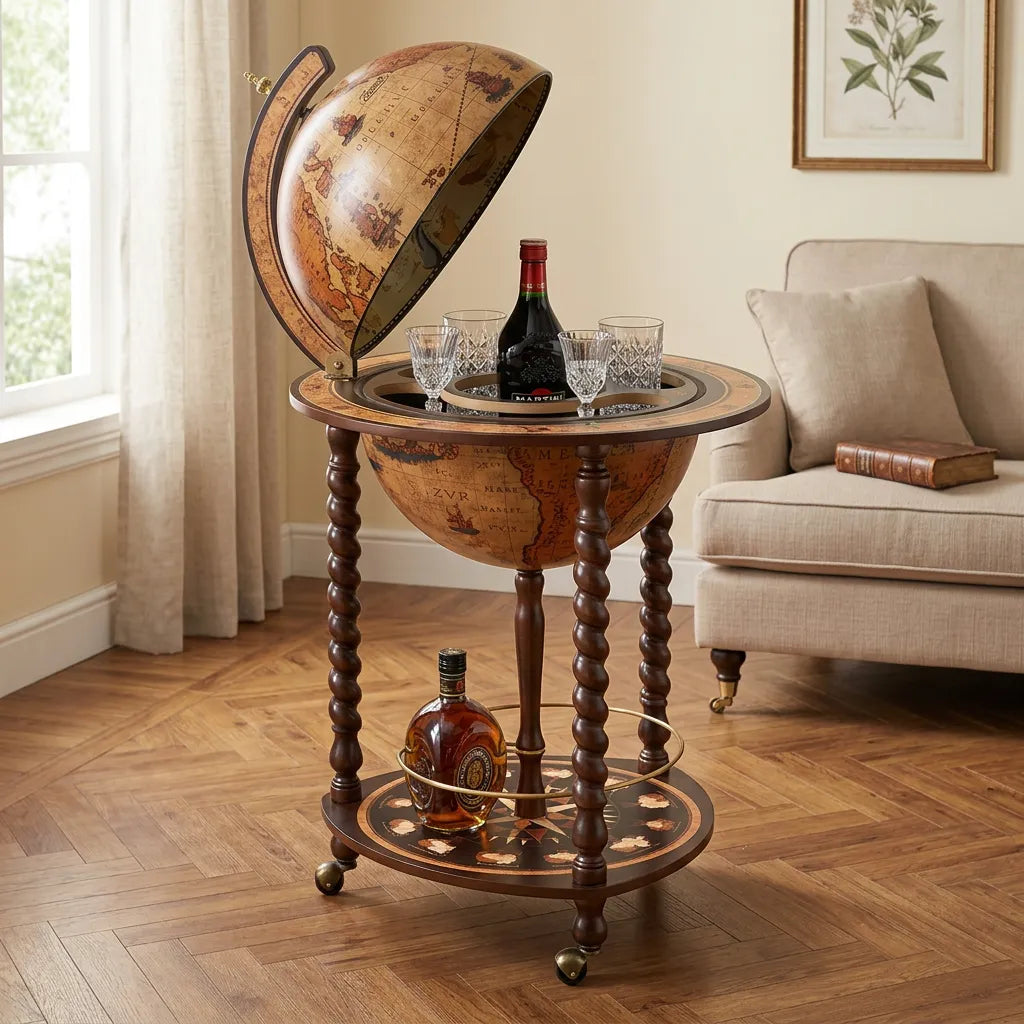
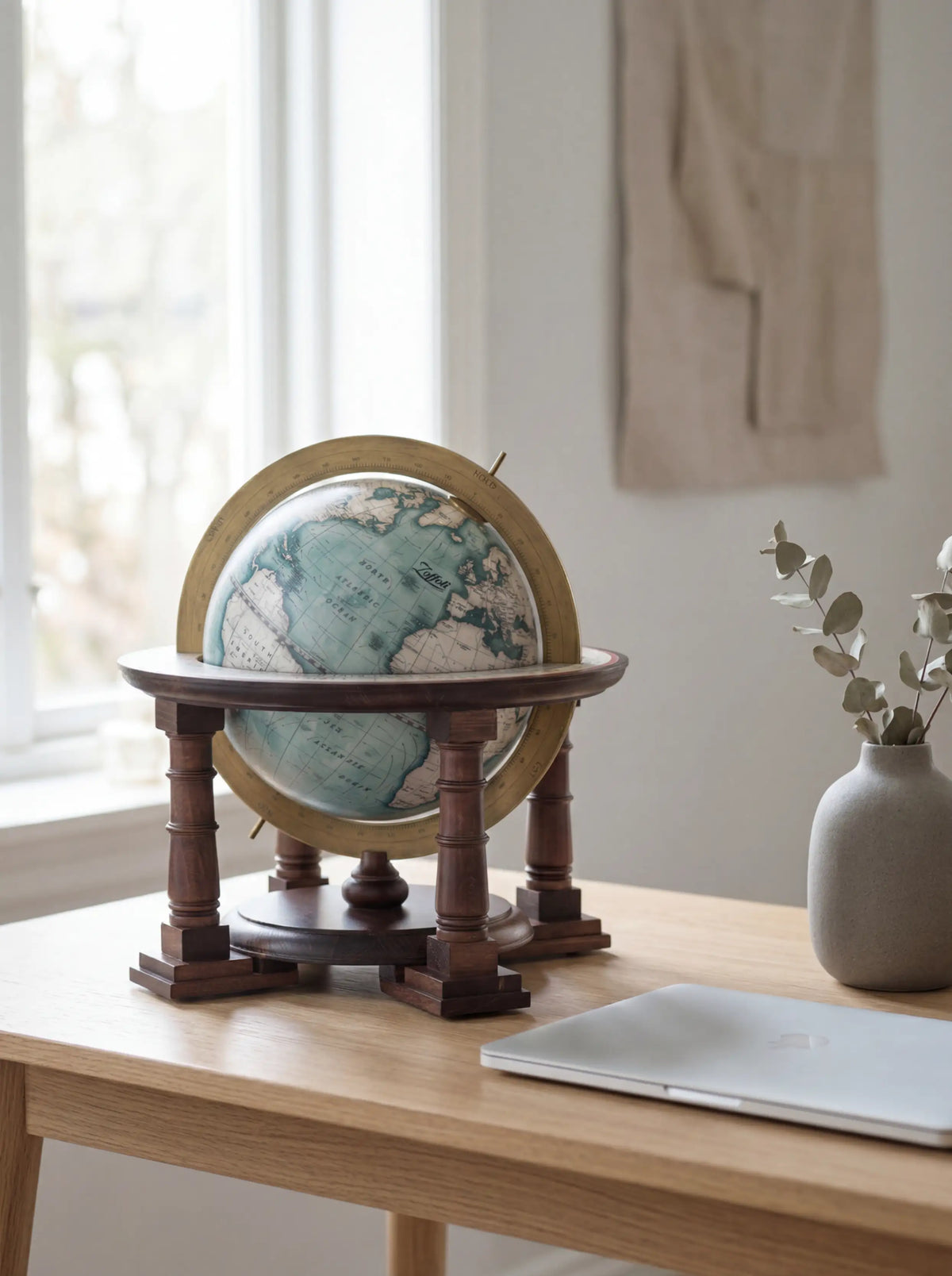
Since 1949, Zoffoli has been creating globes in which geographical representation meets design and Italian craftsmanship.
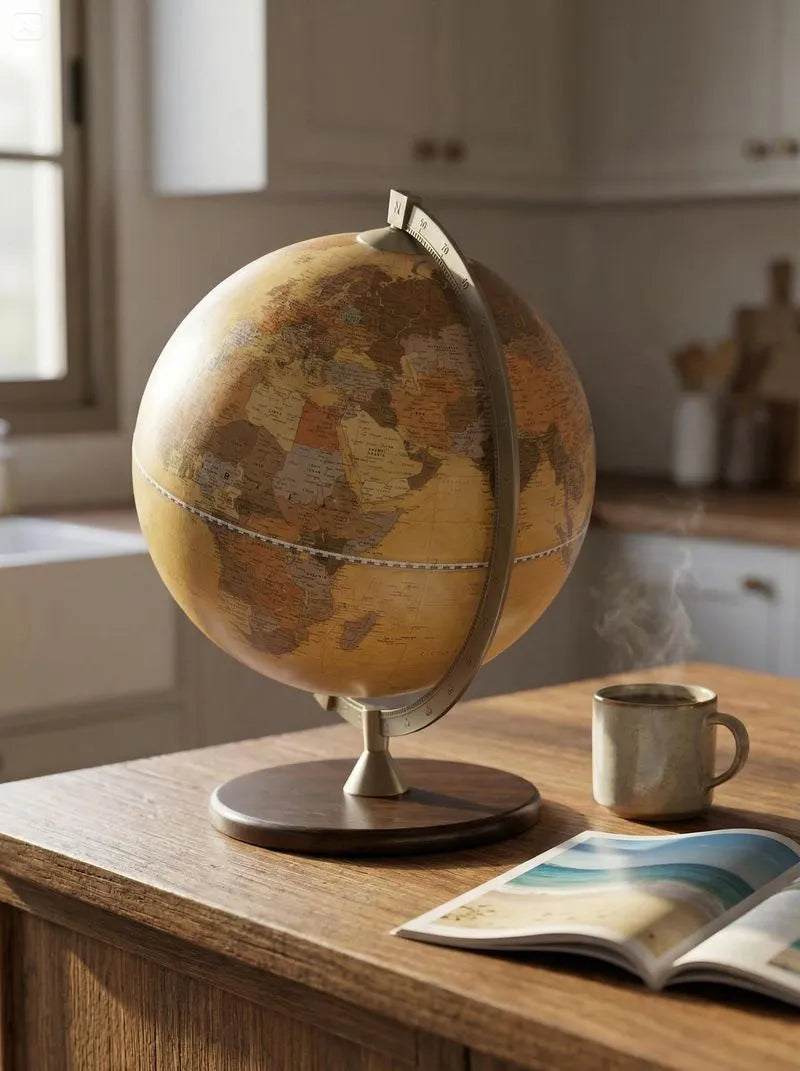
The different cartographic interpretations help define the aesthetic character of each model.
Classic tones evoke the charm of ancient geographical representations, while contemporary versions offer different color combinations.
In any case, the sphere retains its deepest meaning: to represent the world and invite us to discover it.

A world to observe, know, and rediscover
Understanding meridians, parallels, and geographical coordinates means learning to read our planet with greater awareness.
A globe can therefore be, at the same time, a home accessory and an object capable of stimulating curiosity and knowledge.
Because observing the world is often the first step toward wanting to know it better.