A globe is an object we have known since childhood, but we rarely stop to think about how it is made. Behind its seemingly simple form lies a process that combines design, geographical knowledge, manual craftsmanship, and attention to detail.
Since 1949, Zoffoli has interpreted this tradition by creating decorative globes and globe bars, in which geographical culture meets Italian design.

Design: the first step in making a globe
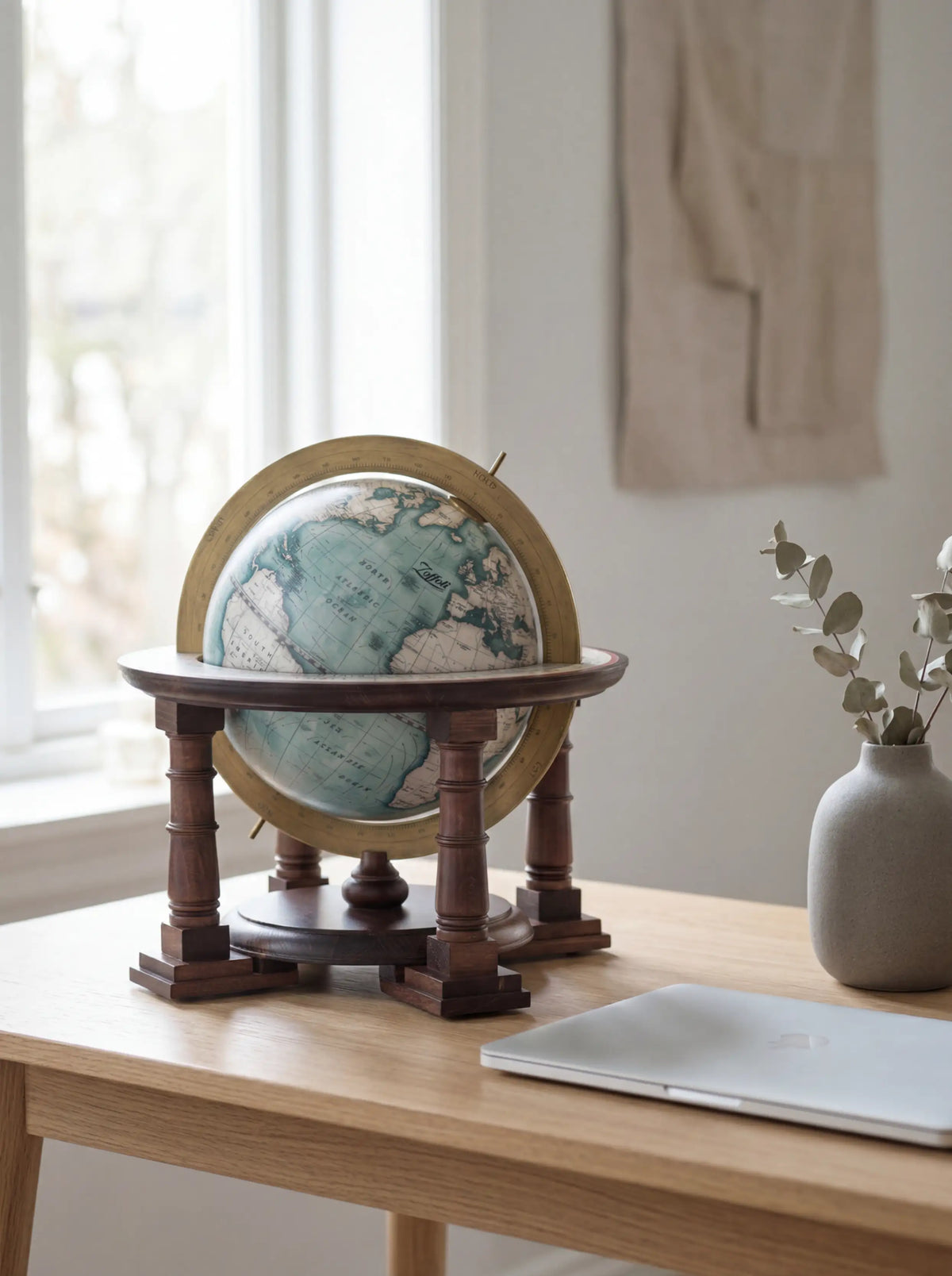
Before becoming a three-dimensional object, every globe begins with a design. The design concerns dimensions, proportions, and the relationship between the sphere and the elements that support it. A desk globe requires a balance between compact dimensions, stability, and readability; a floor model must enhance its presence in the room.
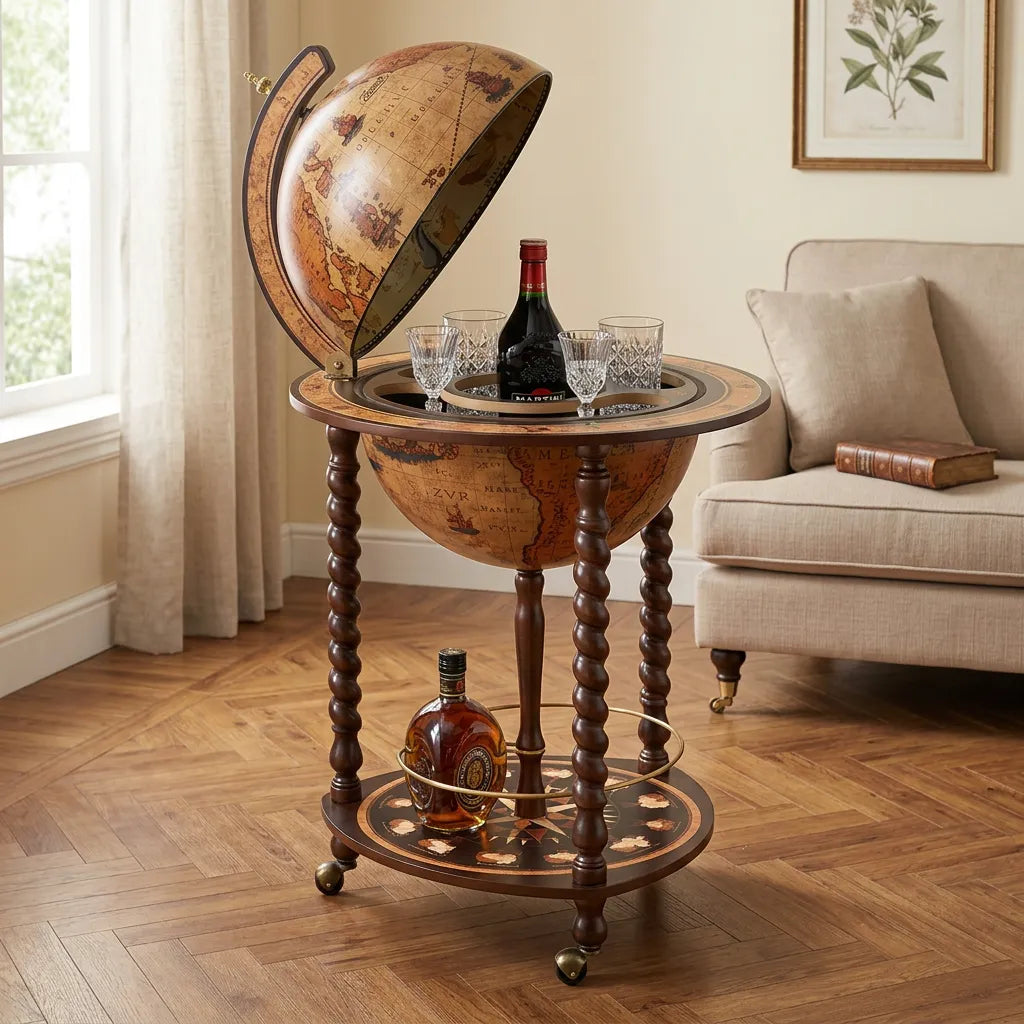
In globe bars, the design becomes more complex: the sphere must integrate with an opening system and an internal space intended for bottles and glasses. Every choice defines aesthetics and functionality.
Making the sphere
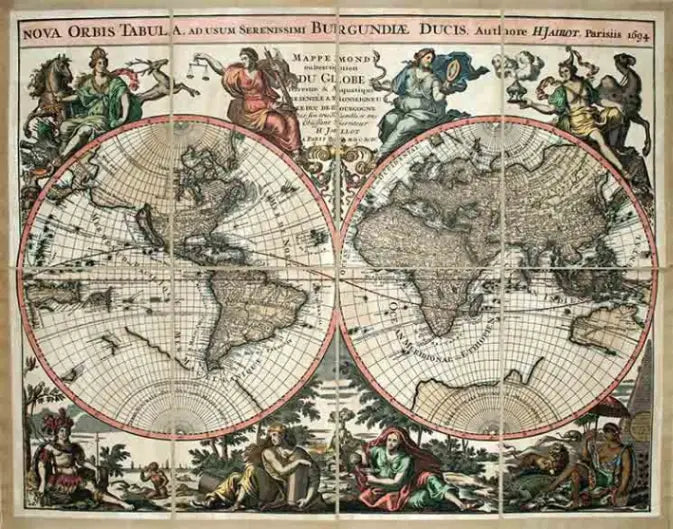
The sphere represents the heart of every globe. Its preparation requires attention to the regularity of the surface, proportions, and compatibility with the other components. The cartography is adapted to the spherical surface using techniques appropriate to the type of product: a step that requires precision, already explored in our story dedicated to cartography.
In globe bars, the sphere must also be able to open, maintaining a correct correspondence between the upper and lower parts.
Building the structure
The support structure determines stability, height, proportions, and style. Depending on the model, components made of wood, composite materials, or metal elements may be used. Construction requires attention to the connection points and the arrangement of the components.

In floor globes, the base supports and enhances the sphere; in globe bars, it also helps organize the space for accessories. To learn more about the differences between the supports, read our article on wooden and metal bases.
Assembly: when the components become a globe
During assembly, the sphere, base, supports, and any opening mechanisms are joined together to ensure stability and functionality. In decorative globes, the overall balance and, where provided, the rotation of the sphere are important. In globe bars, it is also important to check the movement of the upper part and the accessibility of the internal compartment.
Finishes: the character of each model
The shades of the cartography, the color of the structure, and the metal details define the aesthetic identity of each model. Antique color schemes can evoke the charm of historical explorations; essential lines and contemporary shades, on the other hand, find their place in modern interiors. The finishes allow you to choose a globe in relation to the style of the room.
Checks before completion
Before being considered ready, a globe must meet aesthetic and functional requirements. The aspects to be checked include the stability of the structure, the positioning of the components, and the absence of obvious imperfections in the finishes. For models with moving parts, it is also important to check the operation of the mechanisms.
From the workshop to the home: an object that tells the story of the world
Once completed, the globe can find a place on a desk, enrich a bookcase, become the centerpiece of a living room, or accompany a moment of conviviality. It combines the cultural dimension of representing the planet with the aesthetic dimension of design and home décor.

The Zoffoli tradition since 1949
The history of Zoffoli began in 1949, when Italo Zoffoli started an entrepreneurial journey destined to link the family name to the production of globes. Over the decades, the company has developed collections for different furnishing needs, keeping the globe at the center of its identity.
From desk models to large floor globes, and even the characteristic globe bars, each collection expresses a different way of experiencing this object.
Discover the history of Zoffoli and explore the Zoffoli Living globe bars.