For centuries, the globe has fascinated those who love travel, geography, and objects capable of telling a story. Before digital maps and satellite imagery, a cartographic sphere allowed people to imagine distant continents, follow explorers' routes, and observe the world from a different perspective.
But what is the history of the globe? And how did this object, created to represent the Earth, also become a symbol of culture and interior design? To find out, we will explore some key moments in the history of cartography, leading us to Rimini, where Italo Zoffoli began a family tradition in 1949.
The origins of the globe: representing the Earth in three dimensions
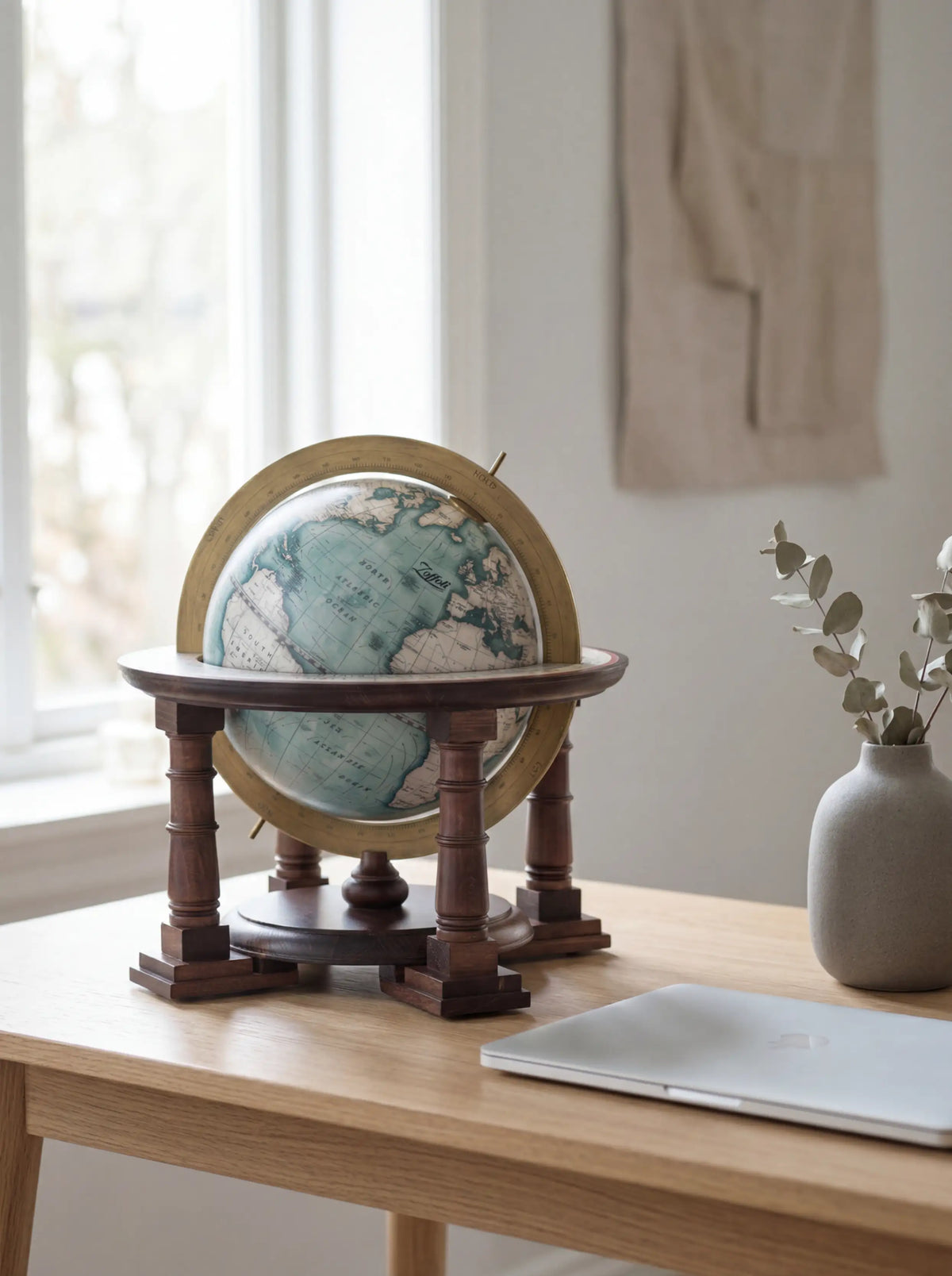
The idea of depicting the Earth as a sphere has ancient roots. Over the centuries, geographical and astronomical knowledge allowed for the refinement of representations of the planet, transforming the globe into a tool for study and observation.
Among the oldest surviving terrestrial globes is the Erdapfel, made by Martin Behaim in Nuremberg in 1492. Its cartography shows the world as known to Europeans before news of Columbus's voyage profoundly altered geographical representations.
Every antique globe therefore tells not only the geography, but also the limitations and discoveries of its time: a portrait of the world as it was known and imagined.
From great explorations to European libraries
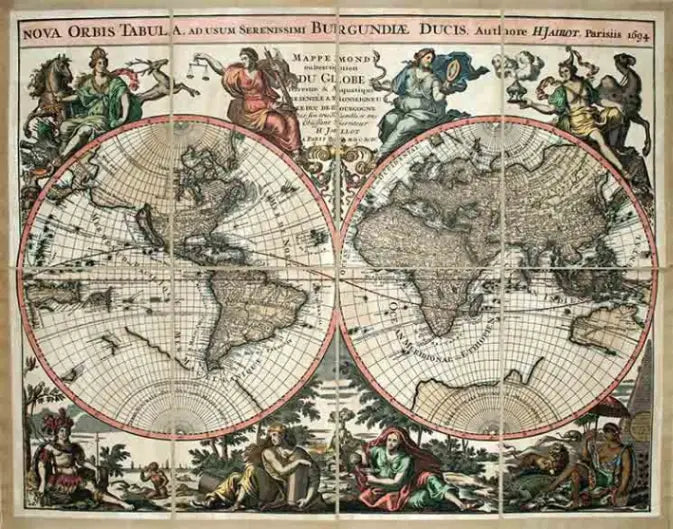
During the Renaissance and in the centuries that followed, terrestrial globes became increasingly important to scholars, navigators, and cartography enthusiasts. Ancient geographical maps could include maritime routes, inscriptions, decorations, and figures inspired by mythology.
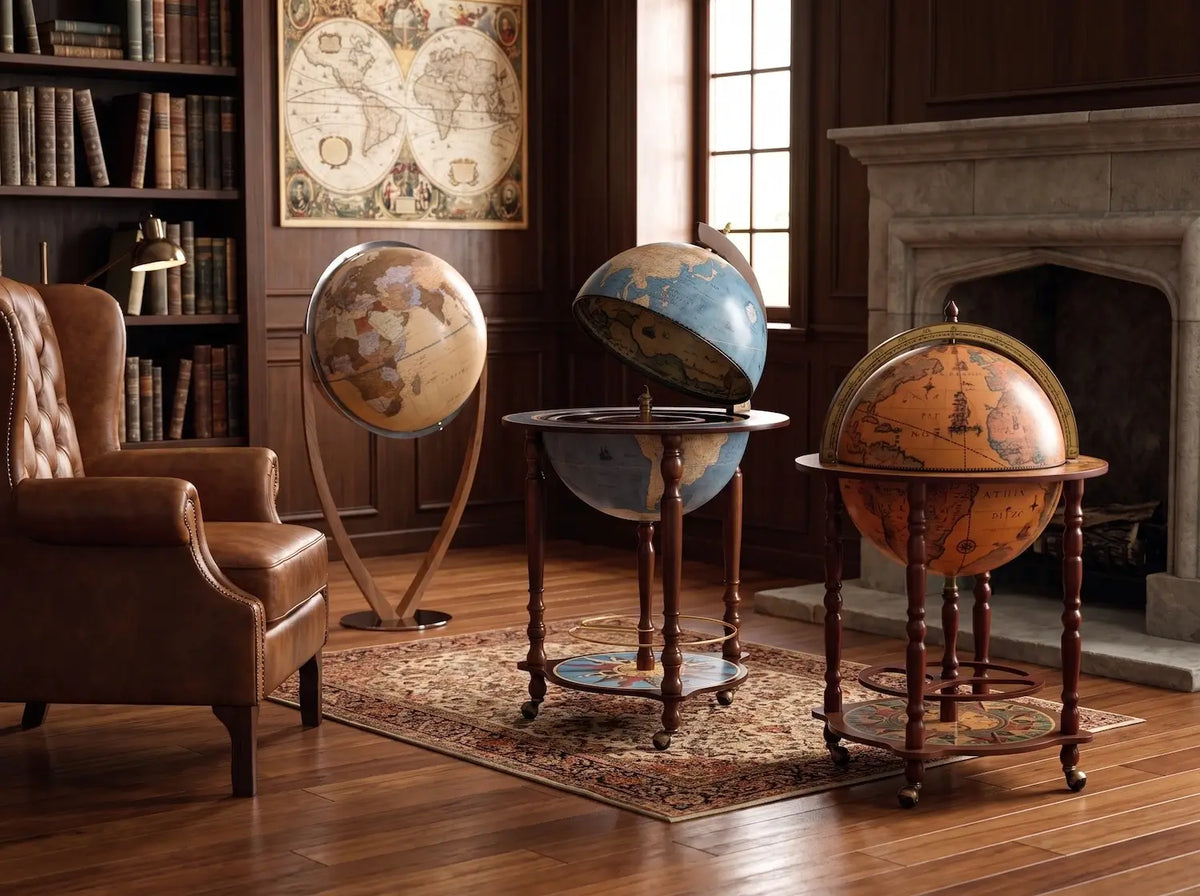
Alongside its geographical function, the globe took on a cultural and decorative value. In libraries, studies, and European homes, a globe could express intellectual curiosity, an interest in travel, and an appreciation for the beauty of objects.
Even today, the charm of an antique globe lies precisely in this meeting of knowledge, imagination, and cartographic art.
1949: Italo Zoffoli and the beginning of an Italian story
In 1949, in Rimini, Italo Zoffoli founded the company that would link the family name to the production of decorative globes. It was post-war Italy, a period of reconstruction, new ideas, and entrepreneurial initiatives.
The Zoffoli story developed through the meeting of the charm of ancient-inspired geographical maps, craftsmanship, and Italian interior design. Over time, the brand became particularly recognizable for its globe bars, objects in which the geographical sphere also reveals a convivial function.
1949 marks the beginning of the company's history: it should not be confused with the date of the invention of the globe bar, whose evolution belongs to a broader story of design and interior design.
The Zoffoli globe bar: cartography and conviviality
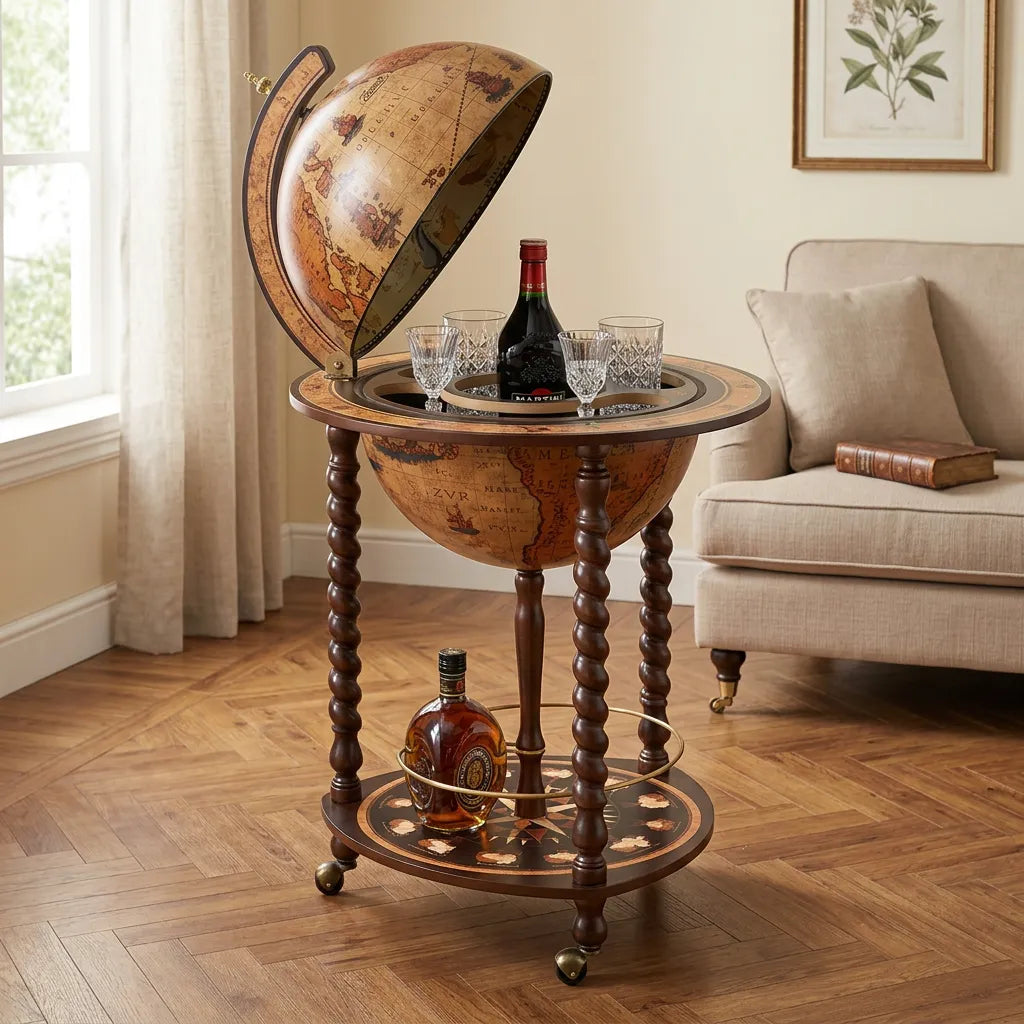
The charm of the globe bar comes from a simple gesture: opening the sphere. When closed, it resembles a traditional terrestrial globe, decorated with historically inspired cartography; inside, it reveals a space designed to hold bottles and glasses.
It is a meeting of two ways of experiencing the home: the pleasure of discovery and that of hospitality. The globe bar is not just a functional piece of furniture. It is an object that invites people to observe, converse, and share moments together.
The ancient maps, with their tones, inscriptions, and illustrations, help make each model immediately recognizable. Those who wish to explore contemporary interpretations of this tradition can discover the Zoffoli globe bars.
A craft tradition that spans generations
Since 1949, the Zoffoli story has continued through the generations. Over time, home styles, tastes, and the shapes of home accessories have changed, but the connection with cartography and the brand's craft identity has remained.
A globe can enter a home as a decorative object and become, over the years, part of a family's memories. It can accompany a party, a move, a conversation, or pass from one generation to the next.
The emotional value of these objects is not measured solely at the time of purchase: it grows in the stories built around them.
Why does the globe still fascinate today?
Today we can virtually explore almost every place on the planet in a few moments. Yet, a globe retains a presence that a screen cannot replace: it can be touched, spun, observed closely, and rediscovered every day.
An ancient-inspired globe is not necessarily an updated representation of contemporary political geography. Its decorative charm also derives from the language of historical maps and their ability to evoke other eras.
It is precisely this dialogue between past and present that makes Zoffoli globes recognizable in both classic and contemporary settings.
Frequently asked questions about the history of the globe
Who invented the globe?
There is no single inventor of the globe. Globes have ancient origins and evolved thanks to the contributions of astronomers, geographers, and cartographers from different eras.
What is one of the oldest terrestrial globes still in existence?
Martin Behaim's Erdapfel, made in 1492, is considered one of the oldest surviving terrestrial globes.
When was Zoffoli founded?
Zoffoli was founded in Rimini in 1949 by Italo Zoffoli. Since then, the family tradition has continued in the world of decorative globes and globe bars.
What is the difference between a geographical globe and a globe bar?
A geographical globe represents the Earth on a sphere. The globe bar adopts this decorative shape, adding an interior space intended for bottles and glasses.
A story that continues to travel
Every globe tells the story of the world, but it also ends up telling something about the people who choose it. There are those who love ancient maps, those who dream of distant travels, and those who find a family memory in a sphere.
We like to think that, once it leaves our workshop, every Zoffoli globe begins a journey all its own: not measured in kilometers, but in the homes that welcome it and the memories of which it becomes a part.
Since 1949, our story continues like this: one globe at a time.